Educate Yourself
Why Education Matters
THE THREATS TO OUR DEMOCRACY AND CONSTITUTION
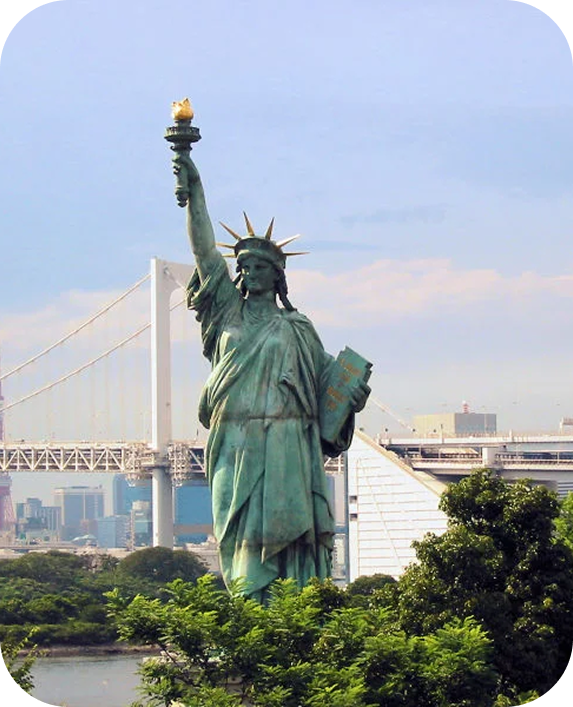
Disinformation & Division
False narratives weaken public trust in elections and institutions.
Erosion of Voting Rights
Erosion of Voting Rights Limiting access to the ballot undermines fair representation.
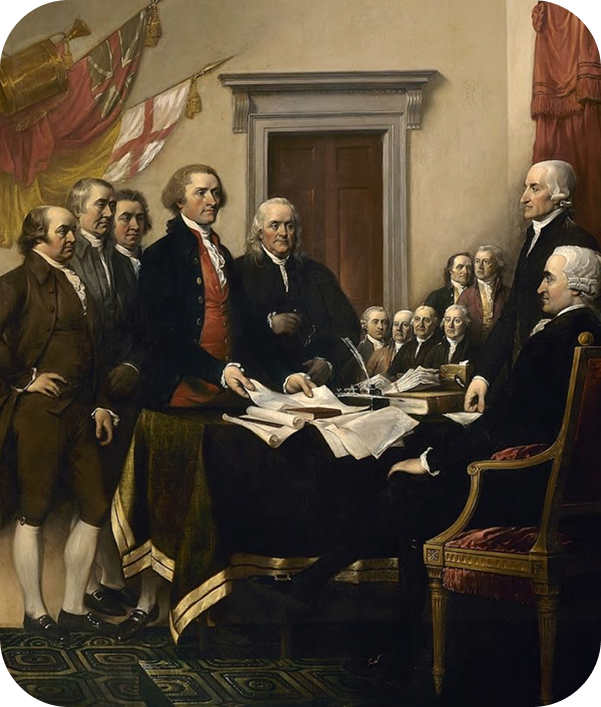
1. Economic & Educational Inequality and the Division of Citizens
Overview
Democracy depends on an informed and empowered citizenry—where people have equal opportunities to participate, deliberate, and shape their collective future. But widening economic and educational inequality is creating a two-tier society in which access to power, resources, and civic influence is increasingly determined by wealth and privilege.
When large segments of the population are locked out of economic mobility and denied a quality education, their voices are diminished in the democratic process. The result is deep division, alienation, and growing susceptibility to demagoguery and authoritarian appeals.
What’s Happening
1. Wealth Concentration and Political Power
- The top 1% now hold more wealth than the entire middle class, giving them outsized influence on elections, policymaking, and media narratives.
- Billionaire-funded PACs and lobbying efforts often drown out the political voice of ordinary citizens.
2. Educational Disparities
- Public schools in wealthier (often whiter) areas are far better funded than those in poorer or more diverse communities.
- Access to higher education remains out of reach for many due to rising tuition, student debt, and limited academic preparation—creating an entrenched class divide.
3. Civic Disempowerment
- Economic hardship leaves many Americans with little time or energy to participate in civic life —volunteering, attending town halls, or even voting.
- Misinformation thrives where educational inequality exists, making some communities more vulnerable to manipulation.
4. Resentment and Polarization
- Inequality breeds resentment—both among those left behind and those blamed for perceived advantage.
- Politicians exploit this division, turning working-class communities against one another along racial, cultural, or geographic lines instead of addressing structural inequality.
5. Erosion of the American Dream
- For many, the promise that “anyone can succeed through hard work” rings hollow.
- When systems appear rigged, faith in democratic institutions erodes—and anti-democratic solutions gain appeal.
Why It Matters
Economic and educational inequality doesn’t just create social hardship—it hollows out democracy from within. When access to opportunity, knowledge, and civic power is unequal:
- Voter participation declines
- Public trust collapses
- Radicalization and extremism grow
- A permanent underclass becomes politically invisible
Democracy cannot survive when too many feel excluded from its promise
2. Expanded Corruption and Abuse in Government with Lack of Oversight
Overview
Corruption and abuse of power within government institutions threaten the very foundation of democracy. When elected officials and bureaucrats prioritize personal gain, favoritism, or ideological agendas over the public interest, and when oversight mechanisms fail or are weakened, trust in government erodes, and democracy suffers.
The lack of effective checks and transparency enables misuse of public resources, undermines accountability, and fuels systemic injustice.
What’s Happening
1. Weakening of Oversight Institutions
- Independent watchdogs, inspector generals, and ethics commissions face budget cuts, political interference, or staffing shortages.
- Legislative and judicial checks on executive power are increasingly disregarded or circumvented.
2. Conflicts of Interest and Cronyism
- Officials may award contracts, appointments, or policy favors to allies, family, or donors, by passing merit and fairness.
- “Revolving door” practices allow government officials to leverage their positions for private- sector gain.
3. Opaque Decision-Making and Lack of Transparency
- Important government decisions are made behind closed doors with limited public scrutiny.
- Freedom of Information Act (FOIA) requests and investigative journalism face barriers.
4. Misuse of Public Funds
- Funds intended for public services or emergency relief are diverted or wasted.
- Corruption scandals at all levels—from local to federal—erode public confidence.
5. Erosion of Rule of Law
- Selective enforcement of laws and political favoritism undermine equal justice.
- Whistleblowers face retaliation, discouraging reporting of abuses.
Why It Matters
Corruption and lack of oversight:
- Undermine democratic legitimacy and the principle of government by the people.
- Fuel inequality and social unrest.
- Weaken institutions meant to protect citizens and enforce laws fairly.
- Hinder effective governance and public service delivery.
3. Technocracy and the Elitist Agenda
Overview
Democracy is built on the principle of popular sovereignty, government by and for the people. But in recent decades, a growing concentration of decision-making power in unelected experts, technocrats, and corporate elites has diluted that ideal.
Technocracy refers to governance by technical experts—economists, scientists, data analysts, and corporate managers—rather than elected representatives. While expertise is essential, when it operates without public accountability, it can become a tool of exclusion, disconnection, and ultimately, anti-democratic control.
When decisions that shape the lives of millions are made behind closed doors, by elites who are insulated from everyday realities, the result is alienation, distrust, and diminished civic agency.
What’s Happening
1. Rule by Algorithm and Bureaucracy
- Key public decisions—like who receives benefits, what neighborhoods are policed, or how students are placed—are increasingly governed by opaque algorithms and technocratic systems.
- These systems are often presented as “neutral” or “scientific,” but they may reflect deep bias and lack public oversight.
2. Disempowerment of Local Voices
- Federal and global technocratic institutions—like the Federal Reserve, IMF, World Bank, and regulatory agencies—can override local preferences or democratic processes.
- Community needs are sidelined in favor of efficiency, market logic, or elite consensus.
3. Corporate-Civic Collusion
- Large tech companies and financial institutions now play outsized roles in shaping education policy, health care, public infrastructure, and even political speech.
- Decisions that affect public life are often made in boardrooms rather than town halls driven by profit, not public interest.
4. Crisis Management Without Consent
- During times of emergency (e.g., pandemics, financial crises), technocratic decision-making often expands rapidly, bypassing public input or deliberation.
- Though sometimes necessary, these expansions can become permanent and weaken democratic control over time.
5. Language of Expertise as a Gatekeeper
- Technocratic discourse often uses jargon, data, and credentialism to exclude ordinary citizens from debate.
- Those without advanced degrees or elite access are made to feel unqualified to challenge decisions that directly affect them.
Why It Matters
Expertise and professionalism have a role in modern governance—but without accountability and inclusion, they can lead to:
- Policy without democratic consent.
- Loss of public trust and transparency.
- Reinforcement of inequality and disempowerment.
- Public backlash that fuels authoritarian populism.
A healthy democracy must honor both knowledge and voice—ensuring that expertise serves the people, not rules over them.
4. The Compromise of Our Civil Liberties & Human Rights
Overview
Civil liberties and human rights, such as freedom of speech, privacy, assembly, and due process, are the bedrock of democracy. They protect individuals from government overreach and ensure all citizens can participate equally in society.
However, these rights are increasingly under threat in the U.S., often justified by appeals to “national security,” “public order,” or “protecting traditional values.” When civil liberties are compromised, democracy itself is weakened, opening doors to authoritarian practices and systemic injustice.
What’s Happening
1. Mass Surveillance and Privacy Erosion
- Government agencies collect and monitor personal data on a massive scale, often with minimal oversight.
- Surveillance disproportionately targets activists, minority communities, and political dissenters.
2. Restrictions on Free Speech and Protest
- Laws and policies increasingly criminalize protests, especially those led by marginalized groups.
- Social media platforms face pressure to censor content, raising concerns about arbitrary suppression.
3. Expanded Police Powers and Militarization
- Police forces have grown more militarized, using excessive force against peaceful protesters and communities of color.
- Qualified immunity laws often shield officers from accountability for rights violations.
4. Challenges to Due Process and Fair Trials
- Prolonged detention without charge, secret evidence, and erosion of legal protections undermine fair judicial processes.
- Increased use of plea bargains pressures defendants to forgo trials, often leading to unjust outcomes.
5. Discrimination and Systemic Inequality
- Laws and policies disproportionately impact minority communities, immigrants, LGBTQ+ individuals, and people with disabilities.
- Voter ID laws, gerrymandering, and restrictive voting policies suppress political participation.
Why It Matters
Civil liberties and human rights guarantee the dignity and freedom of every person. When these are compromised:
- Democracy loses its legitimacy and fairness.
- Citizens fear government intrusion and oppression.
- Social divisions deepen as rights are unequally protected.
- The door opens for authoritarian control and abuses of power.
5. The Dismantling of Our System of Checks & Balances
Overview
The U.S. Constitution established a system of checks and balances to prevent any one branch of government executive, legislative, or judicial—from gaining unchecked power. This system was designed to uphold democratic governance through mutual oversight, accountability, and separation of powers.
Today, this essential framework is being systematically weakened. The very institutions that were created to safeguard against authoritarianism are being manipulated or neutralized, threatening the core of American democracy.
What’s Happening
1. Executive Overreach
- Presidents from both parties have expanded the use of executive orders, but recent actions have pushed boundaries to bypass Congress and the judiciary.
- Loyalty-based appointments and refusals to comply with subpoenas have undermined accountability mechanisms.
2. Legislative Paralysis & Capture
- Hyper-partisan gridlock has weakened Congress’s ability to act as an effective check on the executive branch.
- Gerrymandering and voter suppression laws distort representation, reducing Congress’s democratic legitimacy.
3. Judicial Politicization
- The judiciary, intended to be impartial, has seen increasingly partisan appointments—often rushed or strategically timed.
- Lifetime appointments to federal courts, including the Supreme Court, are being used to entrench ideological dominance far beyond the tenure of any single administration.
4. Undermining of Norms and Independent Agencies
- Longstanding nonpartisan norms have been disregarded, from DOJ independence to intelligence oversight.
- Agencies like the EPA, CDC, and others have been politicized, sometimes silenced or hollowed out.
Why It Matters
Checks and balances are not just legal mechanics—they are the living structure of our democratic system.
When one branch dominates or acts without accountability, it opens the door to authoritarian rule.
The erosion of these safeguards risks:
- Unchecked executive power
- Elections without meaning.
- Laws applied unequally.
- Collapse of public trust in democratic institutions
6. The Loss of Freedom of Speech & Press
Overview
Freedom of speech and a free press are cornerstones of democracy, enabling citizens to express opinions, hold power accountable, and engage in informed debate. Without these freedoms, democracy withers, replaced by censorship, propaganda, and authoritarian control.
However, freedom of expression in the United States faces growing threats, from government censorship, corporate control, to harassment of journalists and activists, that undermine the free flow of information and diverse voices essential to a healthy democracy.
What’s Happening
1. Increasing Censorship and Self-Censorship
- Governments and private platforms pressure or restrict speech deemed “controversial” or “dangerous,” often without clear standards.
- Fear of backlash leads individuals and journalists to self-censor, reducing public discourse.
2. Attacks on Journalists and Media Outlets
- Journalists face harassment, threats, and violence, especially those reporting on corruption, racism, and political extremism.
- Lawsuits, “fake news” accusations, and smear campaigns aim to delegitimize critical media.
3. Consolidation of Media Ownership
- A few large corporations control most news outlets, limiting diversity of viewpoints and prioritizing profit over public interest.
- Independent and local journalism struggles to survive, reducing coverage of important issues.
4. Disinformation and Propaganda
- False information spreads rapidly, confusing public understanding and eroding trust in legitimate news sources.
- State and non-state actors exploit social media to manipulate opinions and polarize society.
5. Legal and Regulatory Challenges
- Efforts to regulate speech online risk overreach and censorship.
- Meanwhile, government surveillance chills free expression.
Why It Matters
A free and independent press is democracy’s watchdog. When speech and press freedoms are
compromised:
- Citizens lose access to truthful information.
- Citizens lose access to truthful information.
- Public trust erodes, weakening democratic participation.
- Polarization deepens as misinformation spreads unchecked.
7. The Rise of Authoritarianism and Fascism
Overview
Authoritarianism and fascism are not relics of the past—they are living threats that can take root within democracies, often under the guise of nationalism, security, or “restoring order.” These ideologies reject core democratic values like pluralism, free expression, fair elections, and the rule of law.
In the United States and around the world, we are witnessing a dangerous resurgence of authoritarian movements: efforts to concentrate power, silence dissent, demonize opponents, and erode institutional checks and balances. Fascism takes this a step further—seeking to fuse state power with ultranationalism, racial purity, violence, and the destruction of democratic norms.
Democracy does not die overnight. It dies slowly—with applause, not alarm, unless we remain vigilant.
What’s Happening
1. Demonization of Opponents
- Political rivals and independent institutions (media, courts, universities) are labeled “enemies of the people,” “traitors,” or “deep state operatives.”
- This rhetoric isolates dissenters and normalizes political violence.
2. Erosion of Free Elections
- False claims of election fraud, efforts to suppress votes, and attempts to override electoral outcomes undermine public confidence in democratic legitimacy.
- Some leaders openly question whether democracy should continue at all.
3. Glorification of Strongman Rule
- Authoritarian figures are praised for being “tough,” “decisive,” or “above the law.”
- Checks and balances are dismissed as “obstacles” rather than safeguards.
4. Militarization and Political Violence
- Paramilitary groups, militias, and lone actors are emboldened to use intimidation or force against perceived enemies.
- Violent rhetoric from elected officials encourages threats against judges, journalists, and public servants.
5. Censorship and Control of Information
- Independent media are discredited, defunded, or banned.
- State-aligned outlets and social media echo chambers replace journalism with propaganda.
6. Ultranationalism and Identity Politics
- Fascist movements elevate a mythic past and call for a return to racial, religious, or cultural “purity.”
- Immigrants, LGBTQ+ people, racial minorities, and others are scapegoated as threats to the “real” nation.
Why It Matters
Authoritarianism and fascism don’t just threaten individual freedoms—they annihilate the democratic system from within. The result is:
- Concentration of power in a single leader or party.
- Suppression of free speech, free press, and opposition.
- Surveillance, fear, and state-sanctioned violence.
- Collapse of public accountability and legal equality.
When fascism rises, it often does so with public support—until it’s too late to stop.
8. The Undermining of Our Due Process of Law
Overview
The U.S. Constitution guarantees due process of law, the right of every individual to fair, impartial, and lawful treatment by the government. It protects against arbitrary power and ensures that no one— regardless of wealth, race, or political affiliation—is above or beneath the law.
Today, that principle is under serious threat. Political interference, selective prosecution, erosion of judicial norms, and efforts to delegitimize the justice system have all contributed to a weakening of this core democratic protection.
What’s Happening
1. Selective Enforcement of Laws
- Legal protections and consequences are increasingly applied unevenly—based on political loyalty, influence, or identity.
- Political allies are shielded from investigation, while opponents are targeted without clear justification.
2. Delegitimizing the Justice System
- Politicians and media figures have sought to discredit judges, juries, and prosecutors for outcomes they dislike—eroding public trust in the rule of law.
- False claims of “weaponized justice” or “rigged courts” are used not to seek reform but to escape accountability.
3. Disregard for Legal Norms
- Defendants openly flouting gag orders, intimidating witnesses, or attacking judicial officers— once unthinkable behaviors—are increasingly tolerated or even celebrated by political factions.
- Court rulings are ignored or circumvented, sometimes by officials who refuse to enforce them.
4. Erosion of Legal Protections for Marginalized Groups
- Efforts to roll back civil rights protections—for voting, immigration, gender identity, or
reproductive choice—disproportionately harm already vulnerable populations. - Legal challenges meant to protect these groups are delayed or dismissed by increasingly partisan courts.
5. Pardons and Immunity as Political Tools
- The presidential pardon power—meant as a check on injustice—has been used to reward loyalists and obstruct accountability.
- Some argue that former presidents should be immune from criminal prosecution altogether—an argument that would place certain leaders beyond the reach of law.
Why It Matters
Without due process, democracy cannot survive. A nation of laws means justice must be blind, impartial, and equally applied. Undermining this ideal creates:
- Two-tiered justice: one for the powerful, another for everyone else.
- Erosion of public trust in courts and law enforcement.
- Legal chaos, vigilantism, or authoritarian control.
- Permanent damage to civil rights and constitutional protections.
9. The Unification of Church & State and the Rise of Christian Nationalism
Overview
The separation of church and state is a foundational American principle, enshrined in the First Amendment to ensure that government does not impose or endorse a particular religion.This safeguard exists not to suppress faith, but to protect both democracy and religious freedom for all.
Today, that wall is under siege. A growing movement of Christian Nationalism seeks to fuse American identity with a specific brand of conservative Christianity, undermining pluralism, marginalizing non- Christians, and reshaping law and policy based on religious doctrine.
This is not about individual belief or the right to worship freely. It is about the political weaponization of religion—a direct threat to constitutional democracy and the rights of all Americans.
What’s Happening
1. Religious Doctrine in Public Policy
- Laws restricting abortion, LGBTQ+ rights, and public education are increasingly justified with religious arguments—not secular, constitutional reasoning.
- Elected officials cite “God’s will” or “biblical law” as a basis for governance, blurring the line between church and state.
2. Supreme Court Decisions Favoring Religion
- Recent rulings have expanded the role of religion in public life—allowing prayer in public schools, public funding for religious schools, and religious exemptions from generally applicable laws.
- These decisions increasingly privilege one faith tradition over others.
3. Christian Symbols and Language in Government
- Calls to declare the U.S. a “Christian nation” are gaining traction among lawmakers and candidates.
- Christian prayers, slogans, and symbols are being elevated in government proceedings— alienating millions of non-Christian Americans.
4. Political Mobilization of Churches
- Some churches openly campaign for political candidates, violating IRS rules separating tax- exempt religious activity from partisan politics.
- Christian nationalist networks coordinate efforts to elect like-minded judges, school board members, and state legislators.
5. Demonization of Religious and Cultural Minorities
- Muslims, Jews, atheists, and other non-Christian groups are increasingly portrayed as un- American or even dangerous.
- This rhetoric fosters division, hate crimes, and exclusion from public life.
Why It Matters
Democracy depends conpluralism, tolerance, and constitutional law—not religious dominance. The fusion of religion and government creates:
- Unequal protection under the law.
- Erosion of public trust in courts and law enforcement.
- Discrimination against non-Christians and dissenters.
- Suppression of scientific and civic education.
- Erosion of religious freedom itself—for everyone.
History shows that when religion is used to justify power, both faith and democracy suffer.
10. The Weakening of Our Independent Democratic Institutions
Overview
Independent democratic institutions, such as election agencies, the Department of Justice, the Census Bureau, Inspectors General, and the press, are essential guardrails in a functioning democracy. Their independence from political interference ensures that laws are enforced fairly, elections are conducted with integrity, and truth is protected in the public square.
But in recent years, many of these institutions have been subject to political pressure, manipulation, underfunding, or outright attack. This erosion undermines public trust, weakens accountability, and clears the way for authoritarian-style governance.
What’s Happening
1. Politicization of Law Enforcement
- The Department of Justice, once respected for its independence, has at times been pressured to act in service of political interests—investigating opponents while shielding allies.
- The traditional “independence firewall” between DOJ leadership and the White House has been eroded.
2. Undermining Election Administrators
- Local and state election officials—once nonpartisan guardians of democratic process—have faced harassment, threats, and removal from office for not supporting false claims about election outcomes.
- Laws in several states have stripped election boards of independent authority or given partisan legislatures the power to override results.
3. Attacks on Inspectors General & Whistleblowers
- Inspectors General serve as watchdogs within federal agencies. Their dismissal or replacement during investigations into executive wrongdoing signals a refusal of internal accountability.
- Whistleblowers have been demonized or punished for exposing government abuse or corruption
4. Suppression of Science and Truth
- Agencies like the CDC, EPA, and NOAA have faced political interference in scientific reporting and public guidance.
- Data has been delayed, altered, or suppressed to suit political narratives—undermining public health, environmental protections, and national preparedness.
5. Diminishing the Role of a Free Press
- Independent journalism has been attacked as “fake news” or “the enemy of the people.”
- Media ownership consolidation and disinformation campaigns have reduced access to reliable, local, and investigative reporting.
Why It Matters
Democracy depends not just on free elections, but on a web of institutions that function independently
of political control.When those institutions are weakened, democracy itself becomes fragile. The cost of this erosion includes:
- Loss of public trust.
- Increased corruption and impunity.
- Threats to free and fair elections.
- Uninformed or misinformed electorate.
- Greater vulnerability to authoritarian rule.
11. Undermining of Our Democratic Processes and Social Safety Nets
Overview
Robust democratic processes and social safety nets are pillars of a just and stable society. Democratic processes, like free, fair elections and transparent governance, ensure that power reflects the will of the people. Social safety nets, such as healthcare, unemployment benefits, and social security, help protect vulnerable citizens, reducing inequality and fostering social cohesion. Yet both are under increasing attack.
Efforts to weaken electoral integrity, suppress voter participation, and dismantle social programs threaten the health of democracy and the well-being of millions of Americans.
What’s Happening
1. Voter Suppression and Election Interference
- Laws imposing strict voter ID requirements, purging voter rolls, and limiting early voting disproportionately impact minorities, the elderly, and low-income voters.
- Misinformation campaigns and disinformation erode public trust in elections.
- Gerrymandering manipulates district boundaries to favor certain political interests, diluting voter influence.
2. Erosion of Election Infrastructure
- Underfunding and politicization of election oversight bodies undermine secure and transparent elections.
- Attacks on election officials and workers intimidate those responsible for fair administration.
3. Discrediting Democratic Institutions
- Persistent claims of election fraud without evidence foster cynicism and polarize communities.
- Undermining the legitimacy of courts, legislatures, and electoral commissions damages democratic governance.
4. Cutbacks to Social Safety Nets
- Programs like Medicaid, food assistance, unemployment benefits, and affordable housing face budget cuts or restrictive eligibility rules.
- These rollbacks exacerbate poverty, homelessness, and health disparities.
5. Privatization and Deregulation
- Privatizing essential services reduces government accountability and accessibility.
- Deregulation in areas like healthcare and labor protections can weaken safeguards for vulnerable populations.
Why It Matters
Democratic processes and social safety nets are intertwined foundations for equality and opportunity.
Their erosion results in:
- Decreased political participation and representation.
- Increased economic insecurity and social instability.
- Heightened inequality and social fragmentation.
- A weakened collective capacity to address national challenges.
12. White Supremacy Movements: A Persistent Threat to Democracy
Overview
White supremacy is an ideology that holds white people as inherently superior and seeks to maintain or restore their dominance over other racial and ethnic groups. These movements undermine democracy by promoting racial hatred, exclusion, and violence, directly contradicting the ideals of equality, justice, and pluralism.
In recent years, white supremacist groups have grown more visible and emboldened, often exploiting political polarization, economic anxiety, and social unrest to recruit and radicalize members. Their influence threatens the safety, rights, and democratic participation of millions of Americans.
What’s Happening
1. Violence and Terrorism
- White supremacist groups are linked to a significant share of domestic terrorism incidents, including mass shootings and hate crimes.
- Their attacks target racial minorities, religious groups, immigrants, LGBTQ+ people, and government institutions.
2. Political Influence and Infiltration
- White supremacists seek to influence elections, policies, and law enforcement agencies.
- Some openly align with political candidates or run for office themselves.
3. Online Radicalization
- The internet and social media platforms serve as key tools for spreading white supremacist ideology and recruiting new members.
- Online hate speech and conspiracy theories often translate into real-world violence.
4. Anti-Democratic Agendas
- These movements promote narratives that deny equal citizenship rights to people of color.
- They seek to roll back voting rights protections, dismantle civil rights laws, and restrict immigration.
5. Symbolism and Propaganda
- White supremacists display flags, symbols, and slogans rooted in racist history and hate.
- Public demonstrations and rallies often feature these symbols, intimidating targeted communities.
Why It Matters
White supremacy fundamentally erodes the democratic principle of equal protection under the law. Its
impact includes:
- Threats to public safety and civil liberties.
- Undermining social cohesion and trust.
- Disenfranchisement and voter suppression.
- Normalization of hate and extremism.
Addressing this threat requires vigilance, education, and strong enforcement of laws against hate crimes and domestic terrorism.
THE CORE PRINCIPLES OF DEMOCRACY
HOW THE CORE PRINCIPLES OF DEMOCRACY PROTECT US
Popular Sovereignty:
This principle asserts that the government’s power comes from the people, and that the people have the right to alter or abolish their government. The Preamble of our Constitution, stating, “We the People,” reflects this idea.
Limited Government:
The government’s powers are restricted, and it can only do what our Constitution specifically allows. This principle is closely tied to the idea of the Rule of Law, where everyone, including government officials, is subject to the law.
Separation of Power:
Governmental power is divided among three distinct branches: the Legislative (Congress), the Executive (President), and the Judicial (Courts). This preserves the balance of power and prevents any one branch from abusing their power.
Check and Balances:
Each branch of government has the power to limit the actions of the other two branches. For example, Congress can impeach the President, the President can veto legislation, and the Courts can review laws passed by Congress. This limits the potential for governmental abuse of power and protects our individual liberties.
Judicial Review:
The judicial branch, particularly the Supreme Court, has the power to review laws passed by Congress and the President and to declare them unconstitutional. This power is not explicitly mentioned in the Constitution but was established through the landmark case Marbury v. Madison. This helps guarantee our constitutional rights, prevents overreach and maintains the balance of power.
Federalism:
The Constitution divides power between the federal and state governments. This division of power ensures that neither level of government becomes too dominant.
These principles, working together, form the foundation of democracy, the political system of America, aiming to balance effective governance with the protection of individual liberties.
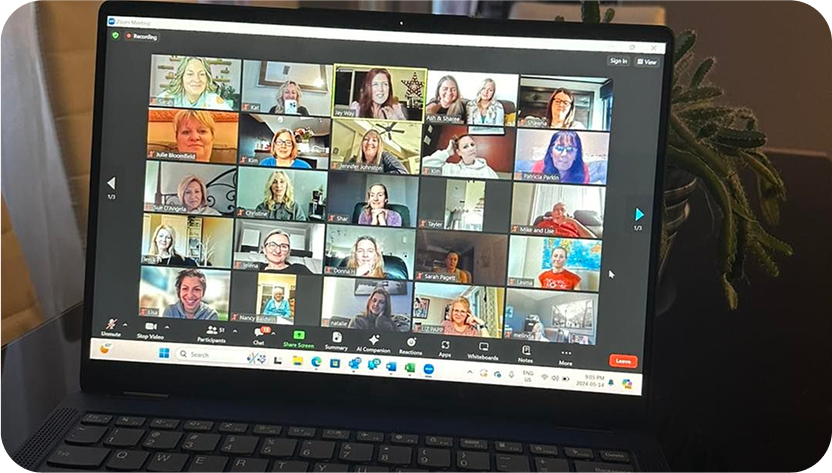
Weekly Call Zoom Videos


Additional educational materials
Explore more trusted educational sources to expand your understanding of democratic systems and current challenges.
Link :
🔗 Brennan Center for Justice — Democracy Studies
🔗 National Constitution Center — Interactive Constitution
🔗 Freedom House — Global Democracy Reports
🔗 League of Women Voters — Civic Education Hub
Past educational presentations
Pro-Democracy coalitions